Can we learn from the Farmer?
A parallel for investing in the Christian life and making disciples

I had a chance to get out into the field to experience harvest with one of our folks this week. I try to get out at least a couple of times each year and I always love it when the sometimes unpredictable timing of harvest (especially bean harvest) works out with the also-sometimes-unpredictable timing of ministry and I can take a couple of hours and get a taste of what folks are doing in this important time of year.
Part of why I find it so important to get out into the field is because it is good as a pastor to have some idea of how people navigate their lives and how they make their living. (To that end, I am happy to come visit ANYone at their place of work, if it is appropriate, so let me know.) A big part of it is because it is such a different kind of experience to what I had growing up. I grew up mostly in a suburban environment. I had lived in a smaller town in Iowa when I was in Kindergarten, but that was only for about six months and I don’t know that I thought about harvest even for that one Fall I was there. Even finishing high school in Marshalltown, where there were fields not far from our house, I never experienced harvest and, I am kind of ashamed to say it, I wasn’t even a bit curious about it.
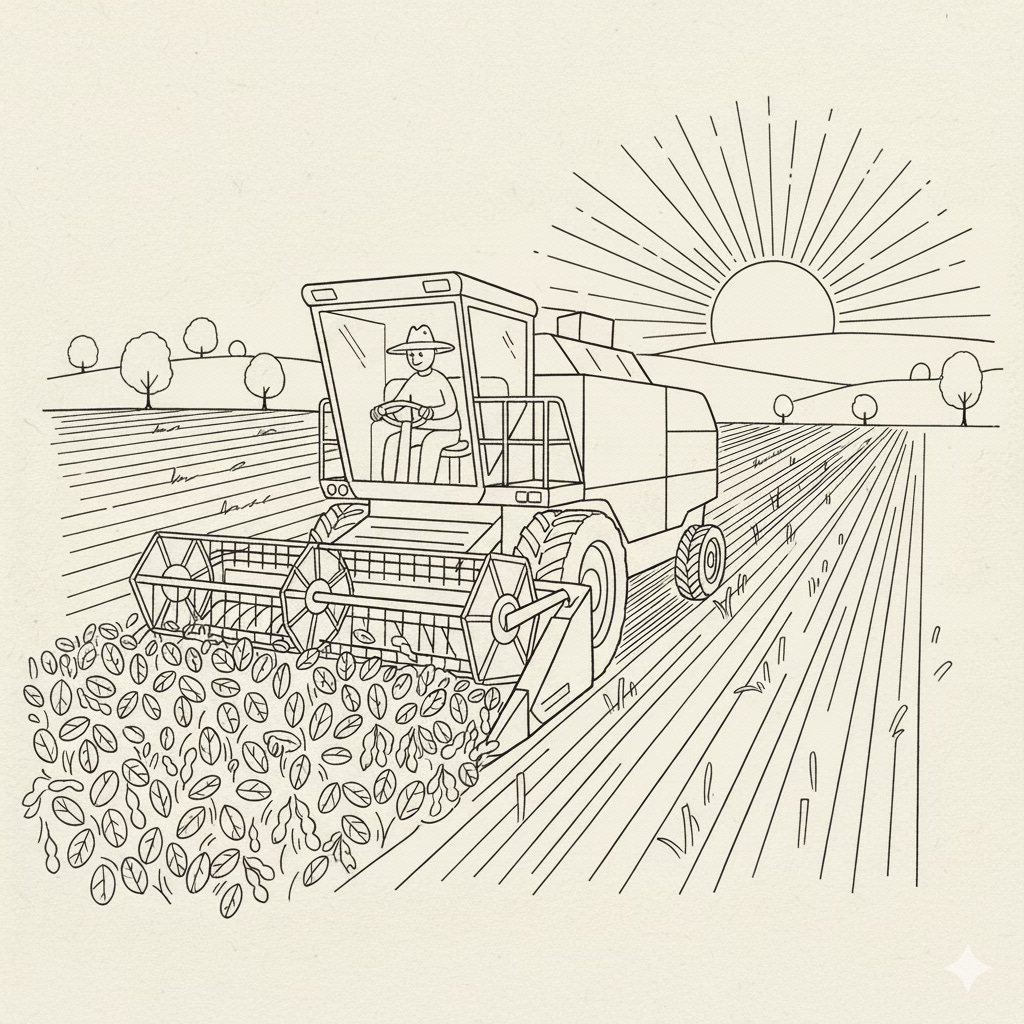
For those of us who either never see harvest in action or else see it but never really think about it, it is easy to take it for granted. It happens, every year and, to the outside world, it always seems to happen without a hitch. Someone in the cities or suburbs doesn’t see the work that goes into preparing a field, planting, cultivating, fertilizing and dealing with weeds, and then harvest. They don’t even see the direct impact of that work. Anything that those people see is about three or four steps, at best, away from the actual sweat and labor that makes it all possible.
If all farming were to stop all at the same time, the rest of the would might not notice right away, but they would notice it eventually. It might take some time for the supplies to run down and then it would take some time for the impacts of that to be felt by people who live in the cities, but it would eventually impact every person on the planet.
Part of why it is so important that farming continues to happen is that, by the time everyone notices it is a problem, it takes some time to get things going again in such a way that things can go back to normal. If there was, suddenly and unexpectedly, a corn shortage today, we couldn’t even begin to fix it for another year. Things like farming need to keep happening, even if not everyone notices.
The same is true for what the church has historically called the “spiritual disciplines:” things like reading the Bible, praying, fellowship with other Christians, and being held accountable for our lives. If someone suddenly stops doing all those things, they might not even notice a difference right away but, eventually, they would. In the same way, if someone were to start doing all those things, they might not notice, in just a week or so, how it impacts their lives. They are the kinds of things that need to be done, consistently and over time, to really see what difference they make.
We live in a world where we want instant results. If something is good, we want to see the good impact on our lives right away. If something is bad, we want to see its negative impact as soon as possible so we can easily associate the cause and the effect. The thing is, life is complicated. Most of the things that really matter are more like farming. You have to start a course of action today in order to see its fruit down the line. If you plant a seed but then realize you can’t harvest for months, are you going to give up? Of course not, because you knew that going in. You don’t get impatient when your expectations line up with reality.
Do the work today, not because you are necessarily going to see the results instantly, but because you aren’t just in this faith business for today, but for your whole life. Invest today, Tomorrow, and everyday, not just for yourself but for others, because we have been called to make disciples and that cannot happen overnight.